
Why AI Agents Alone Won’t Drive Business Value (And What Will)
Everyone’s talking about AI agents right now — the buzz is real. From autonomous workflows to “bot armies” that promise to revolutionize work, you would think that agents are the silver bullet businesses have been waiting for.
But here’s the truth: agents themselves aren’t the real story. The real power comes from what sits underneath them — the data they can access and the systems they can act on. Without that foundation, even the smartest agents are just demos with pretty dashboards, not solutions that drive real, repeatable business outcomes.
The Hype vs. the Reality
AI agents are exciting — I get it. They sound futuristic. They promise autonomy, scale, and efficiency that feels almost magical. But the reality in real-world enterprises is far less glamorous.
You can build an agent that reasons beautifully. You can orchestrate workflows that look elegant on a slide deck. But if your agent can’t:
- Reach clean, governed data
- Understand unified business context, and
- Execute actions in the systems where work actually happens
…then all you’ve built is a pilot — not a production solution.
Why Data and Systems Matter First
At Thunder, our view is simple: AI agents are only as useful as the foundation they sit on. Many organizations are rushing to build agents without pausing to ensure that their data is:
- High-quality and governed
- Accessible across systems
- Contextually relevant to business processes
In short, agents are only as smart as the data they can access and the systems they can act on. If the data’s messy or siloed, or the systems don’t talk to each other, the agent doesn’t solve anything — it just creates confusion.
Building the Right Foundations
That’s why at Thunder we’ve invested heavily in the layers that make AI work in production:
- Unified Data Platforms — so agents don’t chase fragmented or stale information.
- Integration Fabrics — so systems across CRM, ERP, customer service, and more work together.
- Governance and Quality Controls — so the AI isn’t just fast, but trustworthy.
This means pairing capabilities like Salesforce Data Cloud, Informatica, and MuleSoft not just as tools in a stack — but as the strategic foundation for any AI-driven initiative. When data is clean, unified, and governed, agents become much more than automated demos — they become operational, reliable drivers of business value.
Beyond Chat: Agents That Do Work
The future of enterprise AI isn’t about more impressive demos or flashy demos. It’s about:
- Agents that solve real operational problems
- Agents that automate work within the systems employees already use
- Agents that improve outcomes, not just interactions
When you stop focusing on the agent itself and start focusing on the workflows and data it touches, you unlock the part of AI that actually has impact.
What This Means for Business Leaders
If you’re thinking about AI agents, start with these questions:
- Does your data strategy support AI at scale?
If your information isn’t unified and governed, the agent won’t be either. - Do your core systems talk to each other?
If not, your agents will be limited to surface-level automation that doesn’t move the needle. - Are you measuring agent impact on business outcomes?
Without measurement, you’re just experimenting — not transforming.
AI agents can be powerful — but only when they’re connected to the foundations that make them work in real organizations.
The Takeaway
Everybody will talk about AI agents this year. But the winners will be the ones who focused first on:
- Data maturity
- Integration fundamentals
- Governance and trust
- Operational readiness
That’s where AI stops being a cool experiment and starts being a sustainable advantage.
And to me? That’s where the future of work actually begins.
———
If you’d like help turning AI agents from a buzzword into real business impact, reach out — we’re doing it every day. 🔥
Carter Wigell is the founder and CEO of Thunder Consulting, Inc.
Related Articles
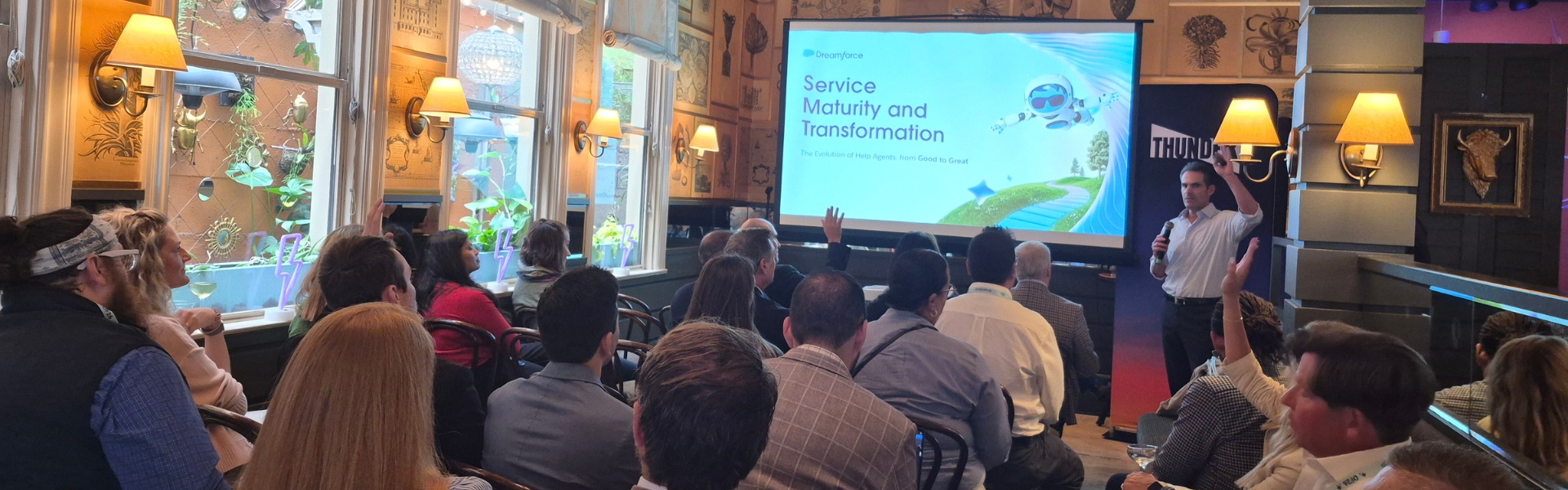
Dreamforce 2026 Session Recap: From Good to Great Service Transformation
At Dreamforce 2026, Yaron Wilf and Salesforce’s Matt Kravitz showed service leaders why great service starts with a clear service model, not an AI agent. Get the five-pillar framework and the 15-step report card.

What Can You Show Me in 90 Days? The New Standard for Federal Modernization
Federal leaders are asking a new question: what can you show me in 90 days? Learn how modernization expectations are changing, and five ways agencies can deliver measurable mission value faster.
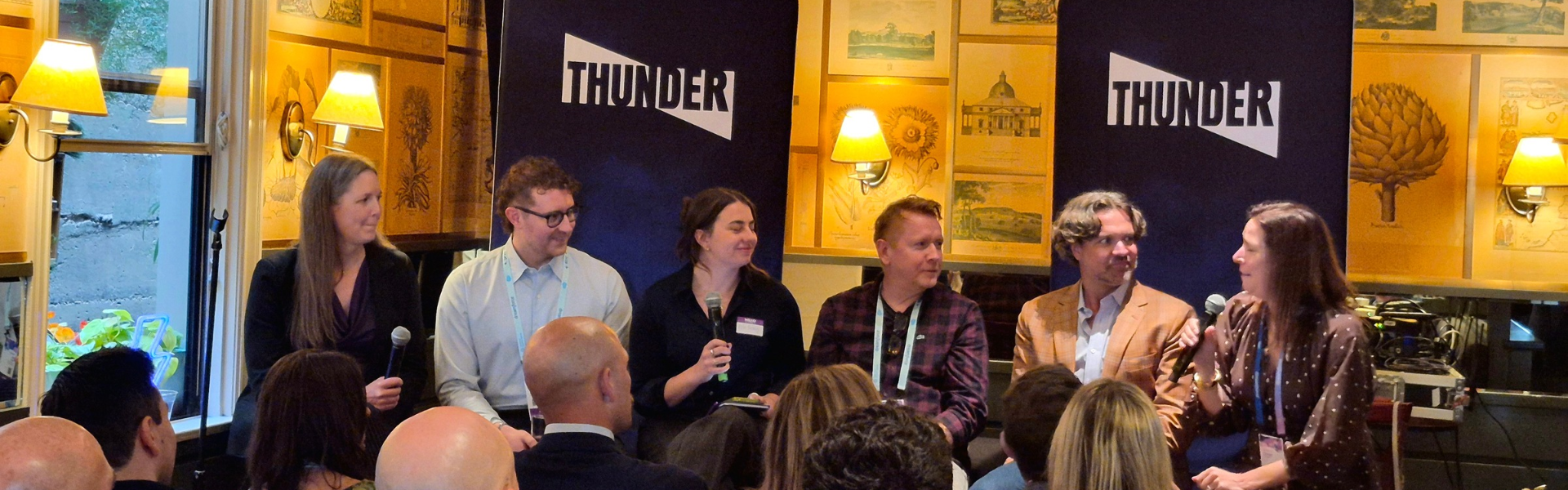
Dreamforce 2026 Takeaways: Q&A with Paul Chesek
Now that the dust has settled on Dreamforce 2026, Paul Chesek, GM of Thunder’s Salesforce Practice, reflects on the agentic shift, the questions customers kept asking, and how Thunder is turning this year’s momentum into results.

Ready to experience
the Thunder difference?
Talk to an expert